


Volkswagen, BMW und Mercedes-Benz machen Catena-X zum neuen Standard für den Datenaustausch in der Lieferkette. Produkt-Carbon-Footprints sind zunehmend eine Voraussetzung für die Beschaffung, und der Druck hat die Tier-1-Ebene längst überschritten. Fertigende KMU, insbesondere in der Kunststoffverarbeitung, stehen jetzt im Fokus.
Die gute Nachricht: Die Einrichtung geht schneller, als die meisten Teams erwarten. Dieser Artikel erläutert genau, was erforderlich ist und wie Sie Ihren ersten regelkonformen PCF-Austausch innerhalb weniger Tage nach dem Start abschließen.
|
Was ist Catena-X? Catena-X ist das gemeinsame Daten-Ökosystem der Automobilindustrie. Es definiert Standards für den Austausch von Lieferkettendaten, einschließlich Produkt-Carbon-Footprints (PCF), über ein zertifiziertes Connector-Netzwerk. Die Teilnahme erfordert die Einhaltung des Catena-X-Anwendungsfallstandards PCF Rulebook (CX-NFR-PCF). |
Warum das Catena-X-Onboarding länger dauert als erwartet
Die Anforderungen sind real und kommen jetzt. BMW, Volkswagen und andere OEMs fordern bereits PCF-Daten von Zulieferern über Catena-X. Unternehmenszertifikate folgen demselben Pfad, und formelle Lieferantenfragebögen sind bereits im Umlauf.
Der Onboarding-Prozess umfasst mehrere Schritte: die Registrierung bei Cofinity-X (dem Betreiberunternehmen für Catena-X), die Beantragung einer Business Partner Number, die Konfiguration eines zertifizierten EDC-Connectors und die anschließende Implementierung der spezifischen Anwendungsfallstandards. Für den PCF-Austausch bedeutet das: das Catena-X PCF Rulebook. Die meisten Zulieferer entdecken den tatsächlichen Aufwand erst, wenn eine OEM-Frist bereits nahe ist. Registrierung, Connector-Einrichtung und Anwendungsfall-Implementierung haben jeweils eigene Anforderungen. Wird eine davon übersehen, stockt der gesamte Austausch.
Die 3-Schichten-Methode von PACIFIC: Vom Onboarding zum ersten Austausch
PACIFIC ist die Plattform zum Berechnen, Verwalten und Austauschen von Produkt-Carbon-Footprints und Unternehmenszertifikaten über Catena-X. In Partnerschaft mit BASF entwickelt und Catena-X-zertifiziert, ist PACIFIC direkt über den Cofinity-X Marketplace verfügbar. Die Plattform deckt die beiden Anwendungsfälle ab, die OEMs zuerst einfordern, und qualifiziert sich für das öffentliche Förderprogramm.
So funktioniert jede Schicht.
Schicht 1: Cofinity-X-Onboarding, von uns übernommen
Der Beitritt zum Catena-X-Netzwerk beginnt mit der Cofinity-X-Registrierung: Identitätsverifizierung, Unterzeichnung des Teilnehmervertrags und Ausgabe der Business Partner Number. Das ist prozedural und nicht technisch schwierig, erfordert aber Vertrautheit mit dem Ablauf.
Das Onboarding-Team von PACIFIC übernimmt diesen Prozess von Anfang bis Ende. Sie stellen Unternehmensdaten bereit, unterzeichnen den Teilnehmervertrag, und die Connector-Einrichtung wird für Sie durchgeführt. Keine internen IT-Ressourcen notwendig, kein tiefes Verständnis der EDC-Infrastruktur erforderlich. Typische Laufzeit vom Kickoff bis zum Live-Connector: fünf bis zehn Werktage.
|
Förderung verfügbar: Hier klicken um mehr zu erfahren Hier klicken um mehr zu erfahren |
Schicht 2: PCF-Daten, die dem Catena-X PCF Rulebook entsprechen
PCF-Daten über Catena-X zu teilen ist nicht bloß das Versenden einer Zahl. Das Catena-X PCF Rulebook (Standard CX-NFR-PCF) definiert die genaue Methodik: wie Emissionswerte berechnet und strukturiert sein müssen, welche Datenqualitätsindikatoren erforderlich sind und welche Regeln für Deklarationseinheit und Referenzzeitraum gelten.
PACIFIC setzt all das bereits bei der Dateneingabe durch. Biogene Kohlenstoffdeklarationen und andere Pflichtfelder werden auf Basis Ihrer Eingaben generiert. Die Plattform validiert die Konformität vor der Übermittlung, sodass die Daten, die Ihr Kunde erhält, nicht von dessen System abgelehnt werden.
Sobald Ihr PCF bereit ist, initiiert PACIFIC einen Connector-zu-Connector-Austausch anhand der Business Partner Number Ihres Kunden. Dieser erhält die PCF-Daten direkt in sein System. Keine E-Mail, keine Tabelle, keine erneute Dateneingabe auf seiner Seite.
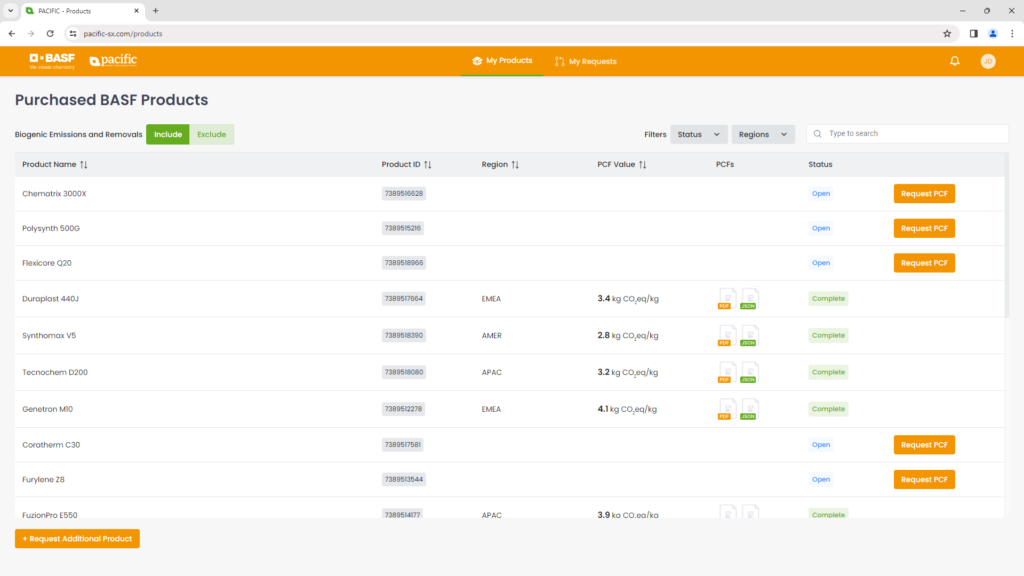
|
Das PACIFIC-Dashboard: PCF-Anfragen verwalten, Austauschstatus verfolgen und Unternehmenszertifikate an einem Ort bearbeiten |
Schicht 3: Ihre erste regelkonforme PCF-Übertragung
Sobald der Connector live ist und Ihre PCF-Daten in PACIFIC eingegeben und validiert wurden, erfolgt die erste Übertragung typischerweise noch in derselben Woche, in der das Onboarding abgeschlossen wird.
Ihr Kunde erhält einen Rulebook-konformen PCF direkt in sein System. Keine manuelle Neueingabe, keine Formatkonvertierung, keine Rückfrage, ob die Daten angekommen sind. Der Austausch wird in PACIFIC protokolliert, sodass Sie einen vollständigen Nachweis haben, was wann gesendet wurde.
Was als Nächstes zu tun ist
Der Catena-X PCF-Austausch folgt einem definierten Prozess. Onboarding über Cofinity-X, Berechnung nach dem PCF Rulebook, Connector-zu-Connector-Übertragung. Jeder Schritt ist handhabbar. Die Herausforderung besteht darin, alle drei korrekt und schnell umzusetzen. Genau hier scheitern die meisten eigenständigen Versuche.
PACIFIC deckt alle drei Schichten ab. OEMs fordern diese Daten jetzt. Die Zulieferer, die zuerst bereit sind, sind diejenigen, die vor der Frist handeln.
Wichtigste Erkenntnisse:
- OEMs wie BMW und Volkswagen fordern bereits PCF-Daten über Catena-X von Tier-2-Zulieferern und fertigenden KMU
- Der Catena-X PCF-Austausch erfordert eine Cofinity-X-Registrierung, einen zertifizierten EDC-Connector und PCF-Daten im Format des Catena-X PCF Rulebooks
- PACIFIC deckt alle drei Bereiche ab: Onboarding, Rulebook-konforme Berechnung und Connector-zu-Connector-Übertragung
Weiterlesen:
→ Scope 3: Why 80% of Your Carbon Footprint Hides in Your BOM
|
Bereit zum Start? PACIFIC-Demo buchen | Catnena- X Förderung | |
About PACIFIC
PACIFIC is developed in partnership with BASF, powered by CircularTree. Catena-X certified, available on the Cofinity-X Marketplace. Learn more at circulartree.com/pacific.