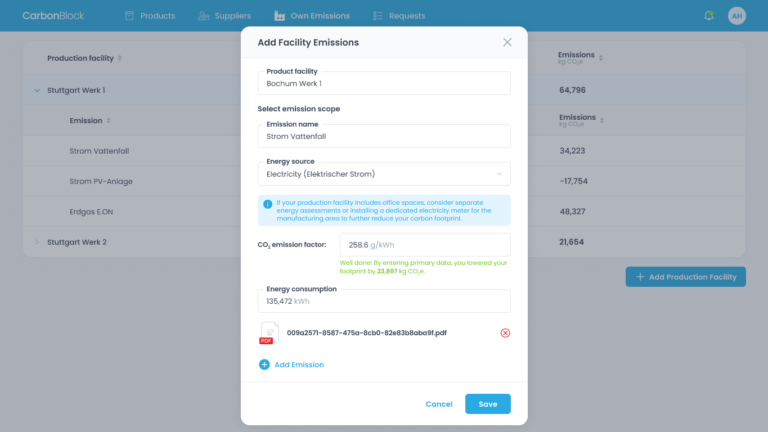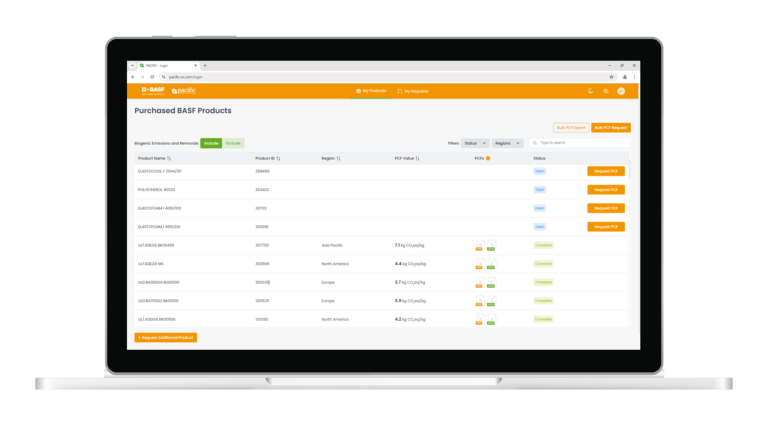



Most companies have Scope 1 and 2 sorted. Energy bills, fuel consumption, company vehicles. That part is manageable. The uncomfortable reality for manufacturers is that it’s also only about 20% of their actual carbon footprint. The other 80% sits in their Bill of Materials, tied to suppliers they don’t control and production processes they’ve never measured.
That gap is now a compliance problem, and it’s arriving faster than most teams expected.
- CSRD reporting is already underway for large EU companies, with the next wave of requirements extending to mid-sized firms. OEMs are already cascading Scope 3 data requests down to tier-1 suppliers with 30 to 60-day response windows. Not requests. Mandates.
- Companies that miss these deadlines lose contracts. Companies that submit rough estimates get flagged by auditors.
- The data requests are not hypothetical. They’re in inboxes now.
Why Is Scope 3 So Hard to Measure?
What are Scope 3 emissions? All indirect greenhouse gas emissions across your value chain. These include emissions from raw material extraction, supplier manufacturing, inbound logistics, and end-of-life processing — everything you don’t own or control. For most manufacturers, this is 70 to 90% of total corporate emissions.
It’s not that companies ignore Scope 3 on purpose. It’s genuinely hard to measure.
A typical industrial product has anywhere from 50 to 200 components. Each one comes from a supplier with its own energy mix, production process, and geography. To calculate a product carbon footprint properly, you need to match every single component to an emission factor in a lifecycle assessment database containing over 26,000 entries. The naming conventions don’t match your BOM. The geographic variants matter. The process assumptions differ by region and year.
Do that manually for one product and it takes a specialist four to six weeks. Do it across a portfolio of 30 products and you’re looking at months of work, a dedicated LCA team, and costs that quickly reach into the tens of thousands.
Most companies have delayed dealing with this because it felt like a future problem. CSRD changed that. The regulation has placed Scope 3 firmly on the reporting agenda for large companies, and even after the Omnibus I adjustments, the direction is clear: product-level emissions data is becoming a standard expectation, not an optional extra. OEMs and large buyers are already cascading PCF data requests down to their tier-1 and tier-2 suppliers, often with tight deadlines and no guidance on methodology.
The companies that can’t respond on time lose contracts. The ones that submit rough estimates get flagged when auditors arrive.
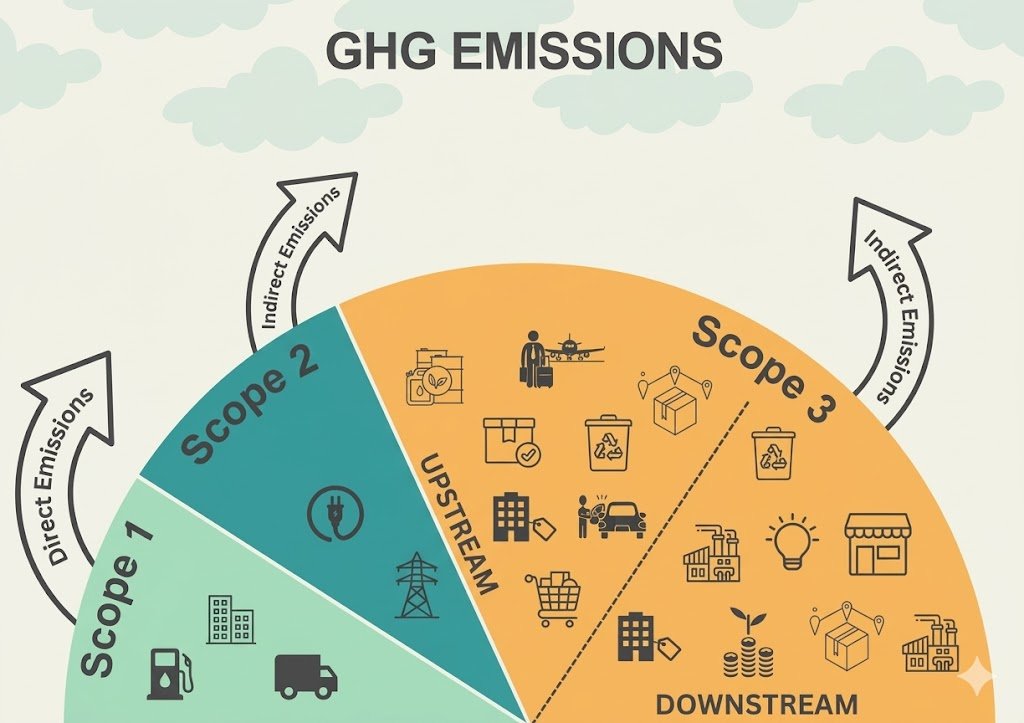
Emissions breakdown chart — Scope 1+2 at ~20%, Scope 3 at ~80%, upstream manufacturing
Why Spend-Based Estimates Backfire
Most teams try spend-based emission factors first. The logic is simple. Estimate emissions based on what you spent in each procurement category, using economic input-output models. No supplier data needed, quick to produce, gets something on paper fast.
The problem is it completely inverts the signal.
Negotiate a better deal with a supplier and your calculated emissions drop, even though nothing changed in their production process. Switch to a more expensive but genuinely lower-carbon material and your footprint looks worse on paper. A standard plastic housing and a recycled-content alternative are completely indistinguishable under spend-based methods. You cannot identify where your real emissions are, you cannot reward suppliers for reducing theirs, and you cannot defend the numbers when an OEM or an auditor pushes back.
Sophisticated buyers know this. Spend-based submissions are increasingly being rejected. Activity-based LCA matching against peer-reviewed databases is the only approach that holds up to scrutiny, and it’s the standard that CSRD-aligned reporting frameworks require. The GHG Protocol’s Scope 3 guidance makes clear that activity-based methods are the preferred approach wherever data is available.
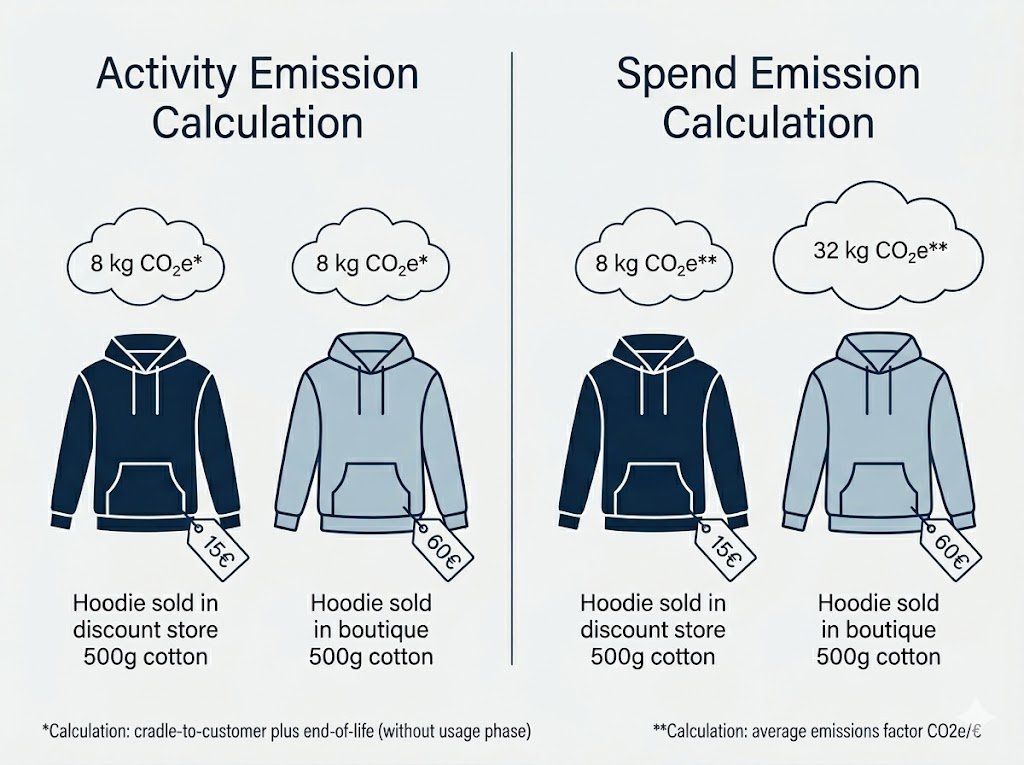
Comparison — Spend-based vs. Activity-based, supplier differentiation
How to Actually Measure It: Start From Your BOM
The standard approach to Scope 3 data collection starts by asking suppliers for their emissions data. That process takes weeks, returns incomplete answers in formats that don’t match each other, and stalls entirely when a supplier doesn’t respond or doesn’t have the data in the first place.
There’s a faster and more reliable starting point: your own BOM.
It already has component names, materials, quantities, and supplier details. That’s enough to calculate a credible product carbon footprint using secondary emission factors from peer-reviewed LCA databases like Ecoinvent. You don’t need a single supplier response to get started. You bring in primary supplier data later, component by component, replacing estimates as better data becomes available.
The bottleneck has always been the matching step. Connecting a “PA6.6 GF30 connector housing” in your BOM to the right Ecoinvent entry, where it might be listed as “market for nylon 6-6, glass-filled.” Three different names for the same material, and you need domain knowledge to know they refer to the same thing. Manually, that’s hours per component. For a BOM with 80 or 100 entries, the work adds up fast, and the risk of inconsistency between team members is real.
AI-powered matching processes an entire BOM at once. It reads component descriptions, pulls in technical datasheet data where available, and returns ranked match suggestions with confidence scores for each component. A human still reviews and confirms the matches, but instead of searching through thousands of database entries, you’re just deciding whether a suggestion is right. A BOM that used to take a specialist four to six weeks takes a day.
🎯 See CarbonMatch handle a real BOM. Book a 30-minute demo.
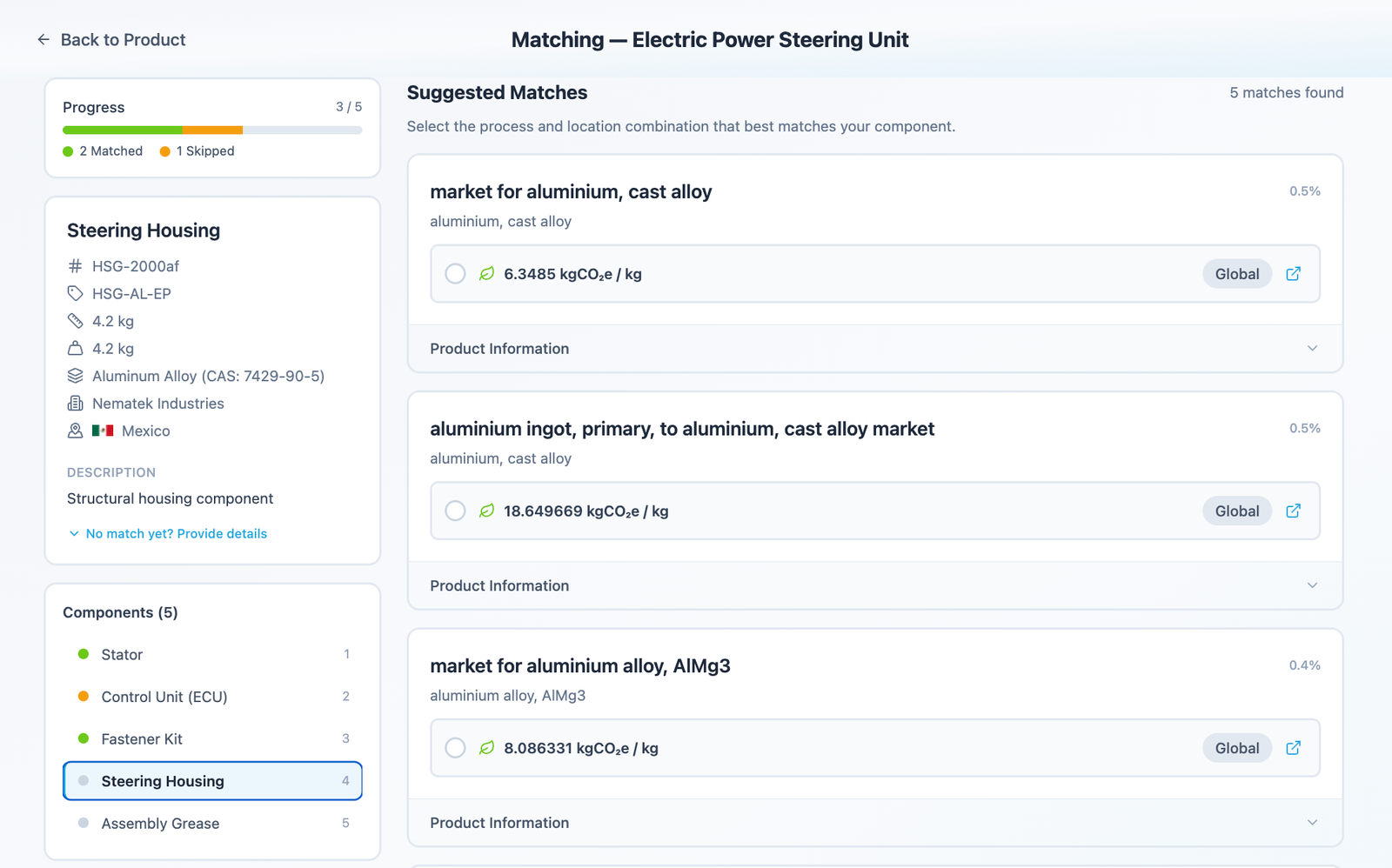
CarbonMatch interface screenshot — BOM components with AI-matched emission factors.
One thing worth flagging separately: the repetition problem. The same polypropylene bracket appears in 15 products across your portfolio. In a manual workflow, that’s 15 separate matching decisions, often made by different people on different days, sometimes landing on different answers. A component library solves this. Once a match is confirmed, it’s stored and reused across every subsequent product automatically. By the time you’re calculating your 20th PCF, the library is doing most of the work.
Getting Started: From BOM to PCF in 3 Steps
Step 1: Export your BOM and upload it. CarbonMatch accepts Excel and CSV. Set aside an hour to clean the data and check that material descriptions are filled in where you have them. The more detail in the BOM, the more accurate the AI suggestions.
Step 2: Review the AI-suggested emission factor matches.
Confidence scores tell you exactly where to focus your attention. High-confidence matches can be confirmed quickly. Lower-confidence ones are where you spend your review time. Budget two to four hours depending on BOM size.
Step 3: Confirm matches and generate your PCF.
You’ll get a full hotspot breakdown showing which materials and components drive the most emissions across your product. That’s the starting point for supplier conversations, material substitution decisions, and reduction targets.
Two things that consistently waste time and credibility:
- Starting with supplier surveys before you have your own BOM baseline. Get your secondary data picture first. Use it to have an informed conversation with suppliers rather than sending a blank data request and waiting weeks for incomplete responses.
- Using spend-based factors as a placeholder. They don’t survive scrutiny and they’ll need to be replaced anyway, so you end up doing the work twice.
The Short Version
Scope 3 is not a future problem. The data requests are already landing in inboxes. The regulatory timelines are set. Companies building a repeatable, BOM-first process now will handle the next OEM request in days. The ones still building spreadsheets manually will keep spending weeks on each product.
Key takeaways:
- Scope 3 represents 70 to 90% of a manufacturer’s total carbon footprint and is now subject to mandatory reporting under CSRD
- Spend-based emission factors won’t survive an audit or a serious OEM data request
- Starting from your BOM with AI-powered matching cuts calculation time from weeks to a single working day, and a component library means every product after the first gets faster
🚀 Book a CarbonMatch Demo | CircularTree Webinars
More on this topic:
→ From Weeks to Hours: How AI Is Changing PCF Calculation
→ Catena-X Supply Chain Transparency: How PACIFIC Handles PCF Data Flows
CarbonMatch by CircularTree uses semantic AI matching built with the German Research Center for Artificial Intelligence (DFKI) to automate emission factor matching for product carbon footprints. Learn more.